I. J.H. Owen II. M.L. Owens III. The Next Generation IV. The Future
A Family History · Chapter I · The Founder

James Henry Owen

1866 – 1923 · Seagrove, North Carolina

The man who planted a kiln in the red clay hills of Moore County — and started something that would last more than 130 years. Husband of Martha Owens (1874–1953).

James Henry Owen — known simply as J.H. — was born in 1866 into the pottery-rich clay country of Moore County, North Carolina. He learned his craft under Pascal Marble, a local master whose shop stood south of Seagrove along what would one day become the NC Pottery Highway.

In 1895, J.H. founded what would become Original Owens Pottery — not yet with that name, but with the same clay, the same fire, and the same intention: to make beautiful, lasting things from the earth beneath his feet. His work in those early years helped define the character of Seagrove pottery itself.

J.H. was also one of the first potters to work with Jacques and Juliana Busbee, the founders of Jugtown Pottery — helping to establish Jugtown's distinctive style, developing the process of turning and firing pieces that would become its hallmark. His influence spread far beyond his own kiln.

He passed both the pottery and its principles to his son, Melvin Lee Owens, who would carry them deeper into the 20th century — and teach them, in turn, to eight children of his own.
Key Moments

1866

Born in Moore County, NC — pottery country

1874

Birth of Martha Owens, who would become J.H.'s wife and partner

1895

Founds the pottery that would become Original Owens Pottery

Early 1900s

Among the first potters to work with the Busbees at the founding of Jugtown Pottery

1923

J.H. Owen passes away; the shop continues under the family — eventually passing to his son M.L. in the 1930s

"The first known potter to work with the Busbees was J.H. Owen — who helped establish the Jugtown pottery style, developing the particular process of turning and firing pieces."

— Jugtown Pottery historical record
Surviving Pieces by J.H. Owen · 1895 – 1923
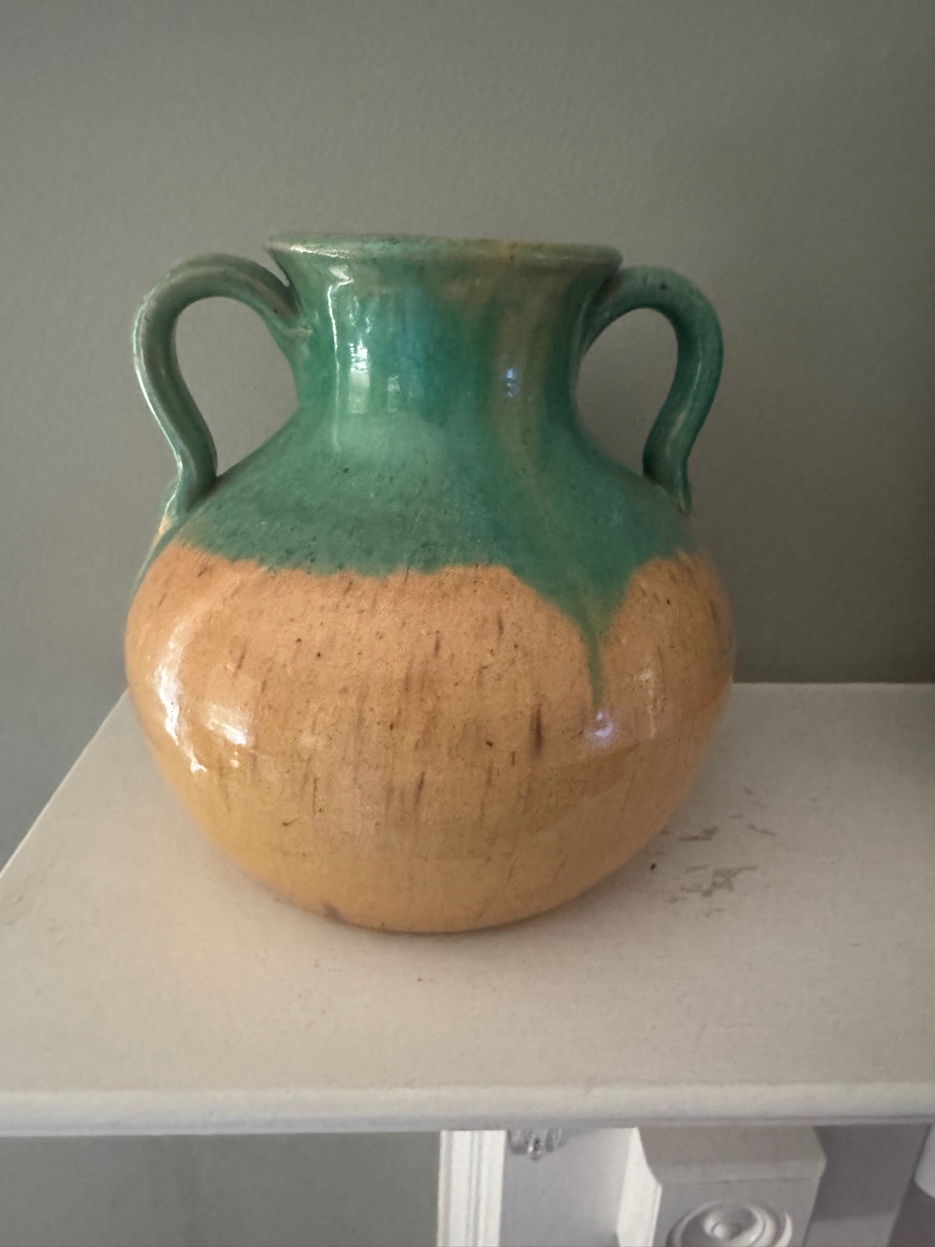
Two-handled amphora by J.H. Owen, teal and amber glaze

Two-handled amphora · Teal drip over amber clay

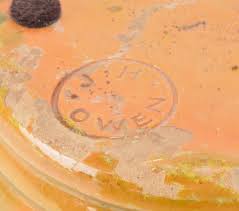
J.H. Owen pottery stamp impressed into clay base

The maker's mark — J.H. Owen's stamp pressed into the clay base. One of the rarest finds in Seagrove pottery collecting.

The Maker's Hand

This two-handled amphora — made by J.H. Owen himself — is one of the rare surviving pieces from the pottery's earliest generation. The bold teal glaze dripping down over the raw amber clay body is a hallmark of the Jugtown-era aesthetic that J.H. helped establish alongside the Busbees in the early 1900s.

The generous, round-shouldered form, the looped handles, the way the glaze is allowed to run freely and stop naturally — these are the fingerprints of a master at work. More than a century later, the same forms and the same spirit can be found in the work of his grandchildren and great-grandchildren.

When a piece carries J.H. Owen's impressed stamp — his initials and surname pressed into the wet clay before firing — it becomes something beyond a pot. It is a document. Fewer than a handful are known to survive in private collections.

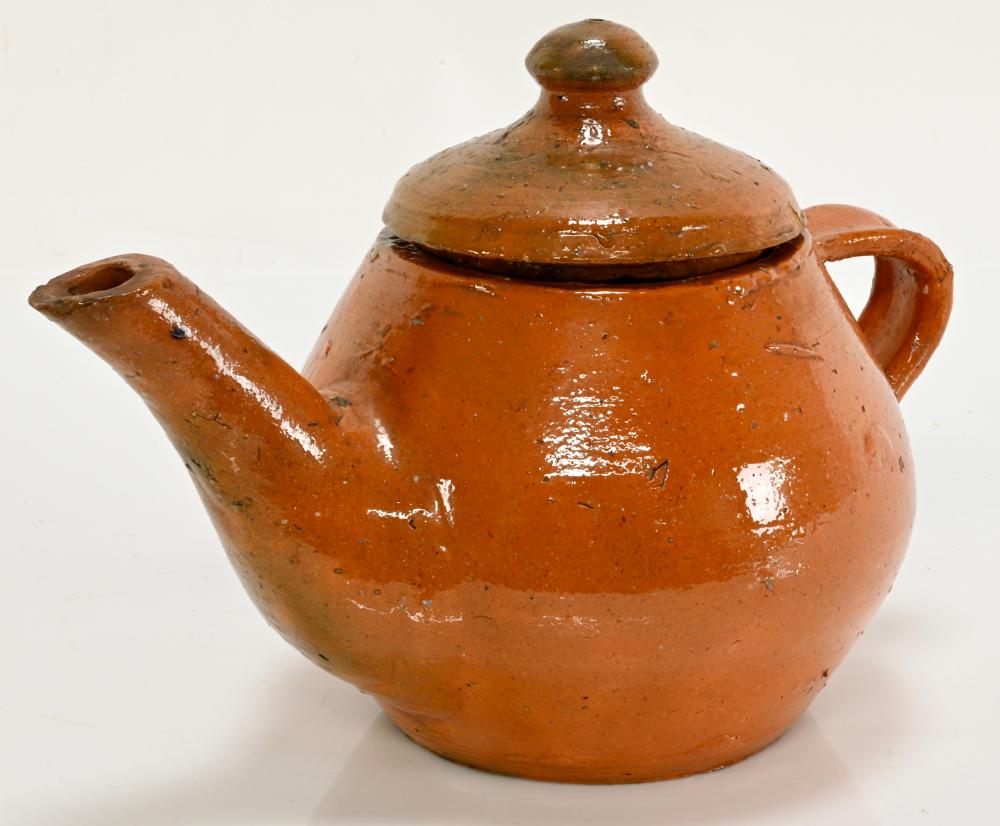
J.H. Owen earthenware teapot in deep amber-red glaze

Earthenware teapot · Deep amber-red lead glaze · J.H. Owen · c. early 1900s

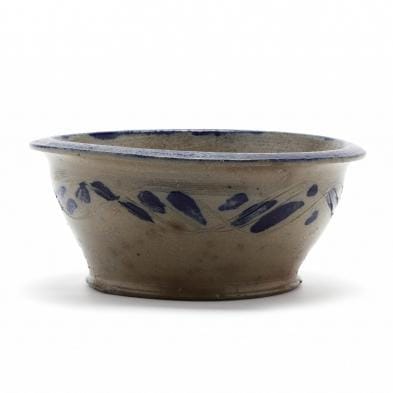
J.H. Owen salt-glazed stoneware bowl with cobalt blue brushwork decoration

Salt-glazed stoneware bowl · Cobalt blue foliate decoration · J.H. Owen

These two pieces reveal the full range of J.H. Owen's craft. The teapot — thrown in earthenware and covered in a deep amber-red lead glaze — shows the same round, confident form that would define Seagrove pottery's utilitarian tradition for generations. The salt-glazed stoneware bowl, with its cobalt blue brushwork leaves and bands, speaks to an older tradition: the Southern folk pottery that stretches back centuries, which J.H. Owen carried forward into the new century alongside the red-clay Jugtown work for which the family became famous.

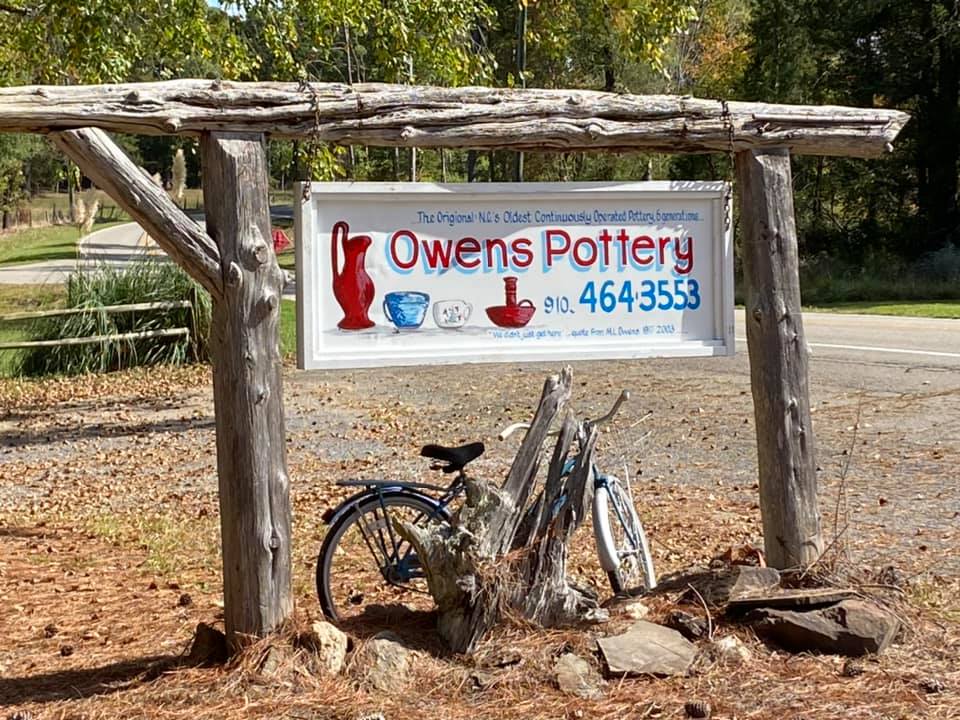
Original Owens Pottery road sign

The road sign at the edge of the property — the same ground where J.H. Owen first fired a kiln in 1895

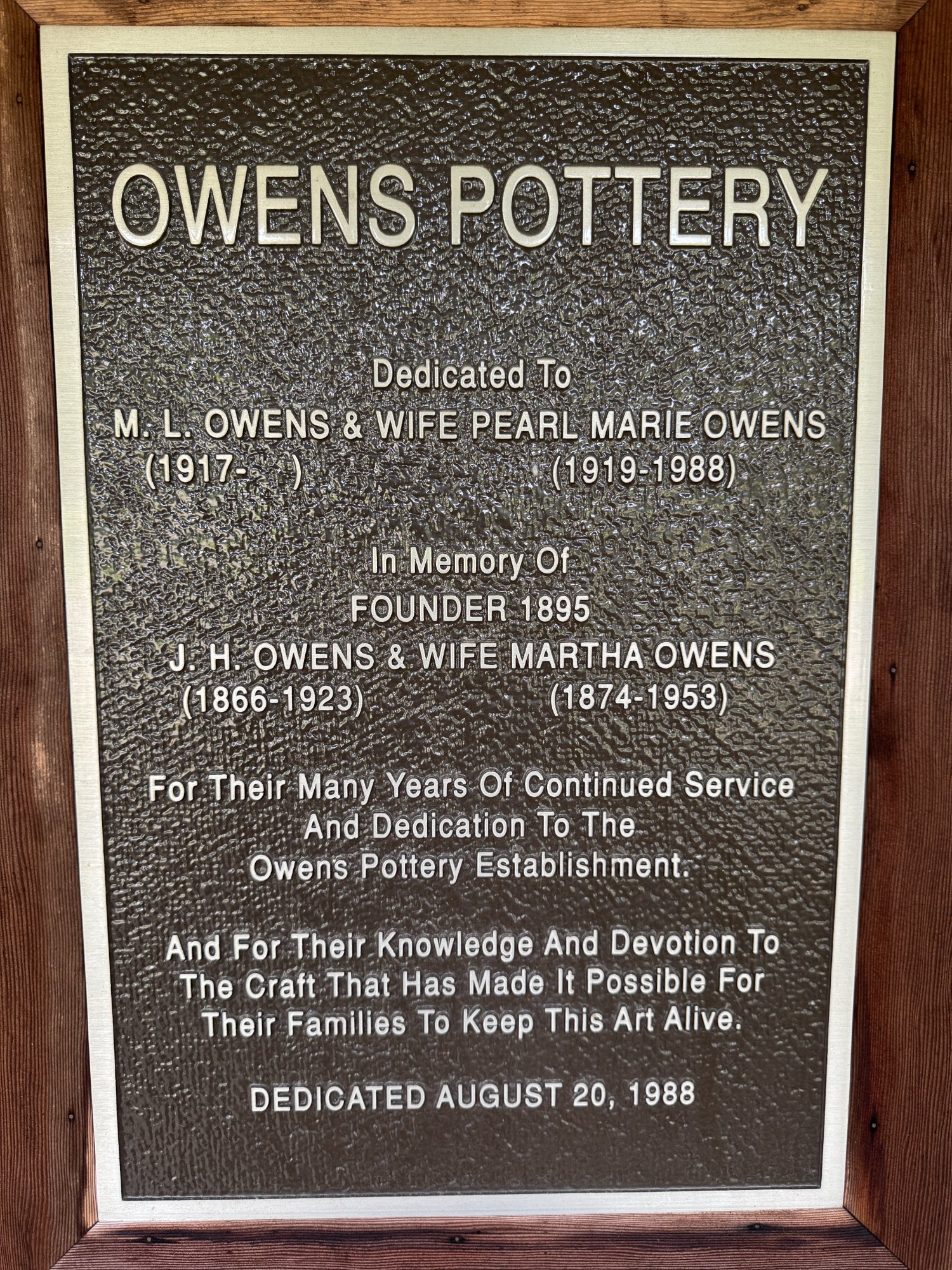
Owens Pottery dedication plaque — dedicated August 20, 1988

The dedication plaque hung in the shop — dedicated August 20, 1988, honoring J.H. Owen (1866–1923) and M.L. Owens (1917– )

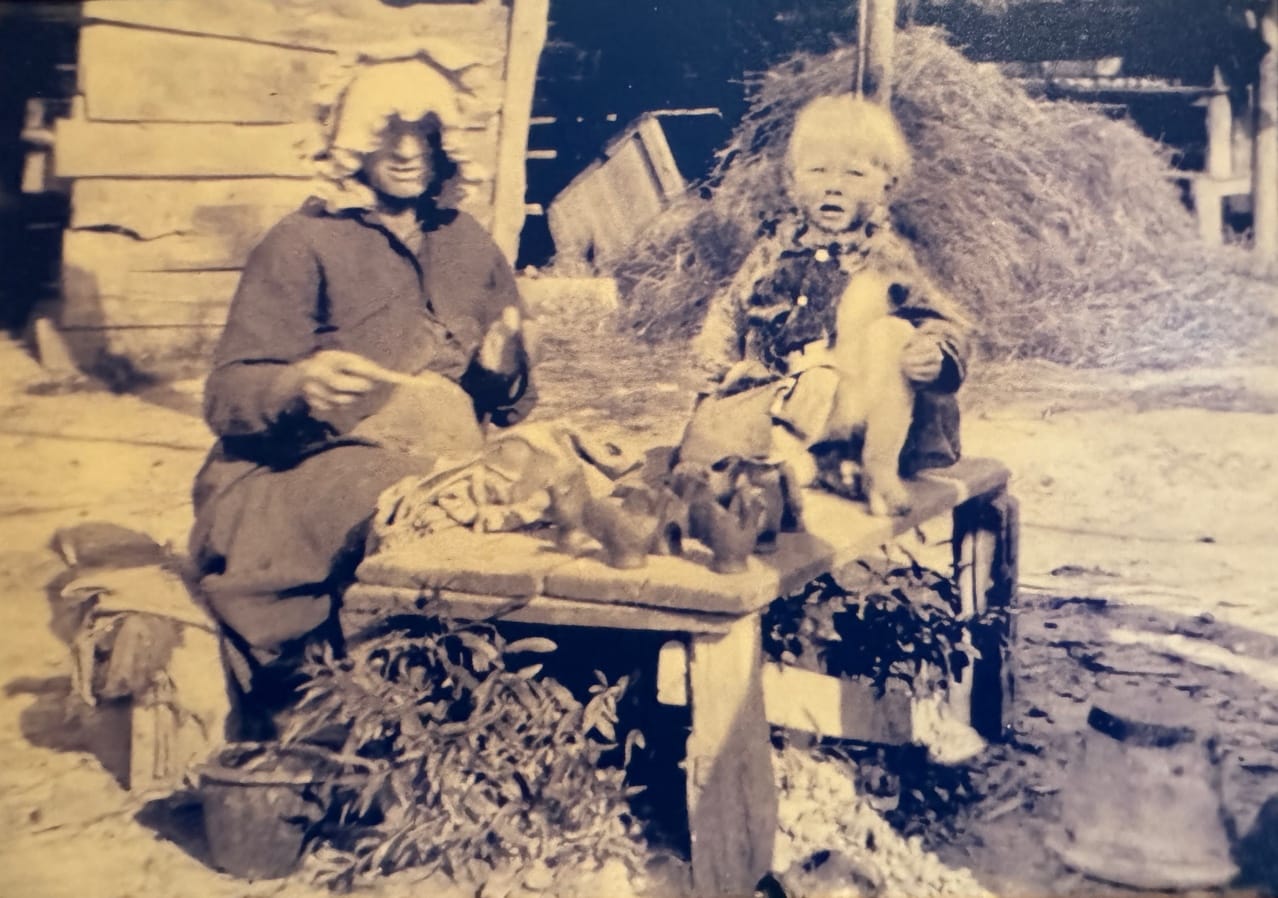
Martha Jane Owen with young M.L. Owens, clay figurines on table

Martha Jane Owen — J.H.'s wife — with her son M.L. Owens at age four. Clay figurines of chickens on the table between them; the barn and haystacks of the Westmoore farm behind.

The Family Behind the Kiln

Martha Jane Owen was the steady presence behind J.H.'s pottery — raising their children on the Westmoore property where the kilns burned and the clay was always close at hand. This photograph, taken sometime in the early 1920s, shows her with a four-year-old M.L. Owens, the son who would grow the pottery into a regional institution. The little clay chickens on the table between them suggest that even as a toddler, M.L. was already in the clay.

It is one of the earliest photographs in the family's possession — a glimpse of the Westmoore farm as it looked when J.H. Owen was at the peak of his craft, and a reminder that pottery was never just a trade. It was a way of life that surrounded every member of the family from birth.

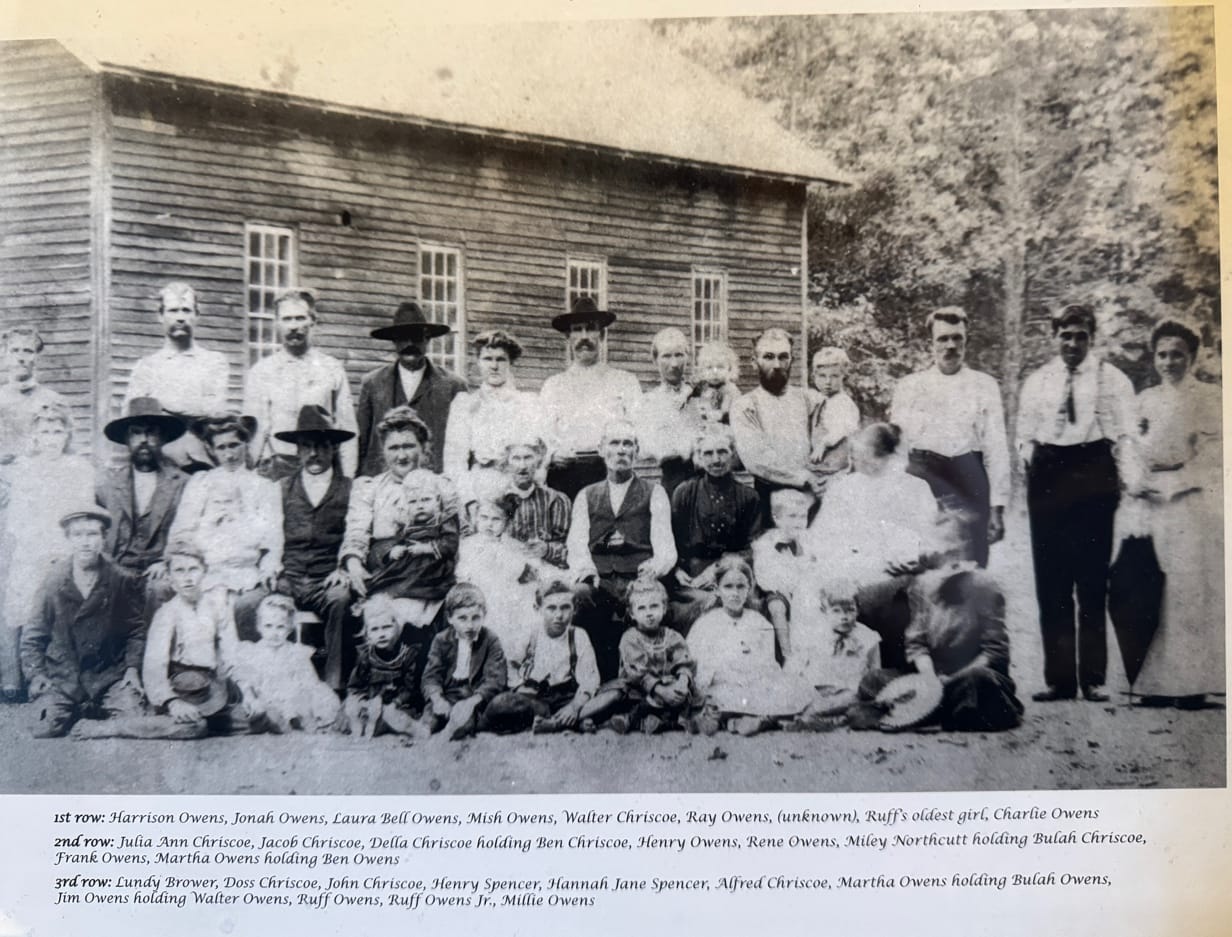
Family & Community · Westmoore, NC · 1906

Owens family and community members gathered outside a wooden building, 1906

1st row: Harrison Owens, Jonah Owens, Laura Bell Owens, Mish Owens, Walter Chriscoe, Ray Owens, (unknown), Ruff's oldest girl, Charlie Owens
2nd row: Julia Ann Chriscoe, Jacob Chriscoe, Della Chriscoe holding Ben Chriscoe, Henry Owens, Rene Owens, Miley Northcutt holding Bulah Chriscoe, Frank Owens, Martha Owens holding Ben Owens
3rd row: Lundy Brower, Doss Chriscoe, John Chriscoe, Henry Spencer, Hannah Jane Spencer, Alfred Chriscoe, Martha Owens holding Bulah Owens, Jim Owens holding Walter Owens, Ruff Owens, Ruff Owens Jr., Millie Owens

J.H. Owen — identified as Jim in the family caption — stands in the back row holding his son Walter Owens, who would go on to become a potter himself in Sanford, NC. Around them: three generations of the Owens, Chriscoe, Spencer, and Bolick families who made up the Westmoore community in 1906 — the same community that had been turning clay for generations, and would continue to do so for generations more.